
A Gateway to the Untouched Central Asia
Ready made tours regularly updated and carefully designed with the Nomad’s Land spirit.
What makes us unique?
The Nomad's Spirit
Driven by the passion of discovering Central Asia for more than 15 years, we have been pushing the boundaries of classic tourism on the Silk Road to offer our guests a unique and innovative experience. In direct partnership with mountain communities, we respect the values of ecotourism, which is the driving force for our pioneering and exceptional tours. Find out more here…
A Tailor-Made Experience
From the beginning Nomad's Land has been making tailor-made travel its specialty because it's your vacation, it's all up to you! All of our vacations are 100% customizable to your dietary requirements, type of vehicles, level of authenticity and countless other factors that goes beyond imagination. Use the trip planner function on our website and give free rein to your travel dream to make your trip to Central Asia unforgettable. Our trip designers will work with you one on one building the tailor-made adventure of your dreams on the Silk Roads.
In the Heart of the Silk Roads
While operating in all the countries of Central Asia and beyond, we have chosen to remain an agency on a human scale, because each traveler is unique in our eyes. Based in Bishkek, the green capital of Kyrgyzstan, Nomad’s Land has established a network of trusted partners throughout Central Asia which allows us to carry out your wildest travel plans along the Silk Roads. Discover its magical places.
What makes us unique?
The Nomad's Spirit
Driven by the passion of discovering Central Asia for more than 15 years, we have been pushing the boundaries of classic tourism on the Silk Road to offer our guests a unique and innovative experience. In direct partnership with mountain communities, we respect the values of ecotourism, which is the driving force for our pioneering and exceptional tours. Find out more here…
A Tailor-Made Experience
From the beginning Nomad's Land has been making tailor-made travel its specialty because it's your vacation, it's all up to you! All of our vacations are 100% customizable to your dietary requirements, type of vehicles, level of authenticity and countless other factors that goes beyond imagination. Use the trip planner function on our website and give free rein to your travel dream to make your trip to Central Asia unforgettable. Our trip designers will work with you one on one building the tailor-made adventure of your dreams on the Silk Roads.
In the Heart of the Silk Roads
While operating in all the countries of Central Asia and beyond, we have chosen to remain an agency on a human scale, because each traveler is unique in our eyes. Based in Bishkek, the green capital of Kyrgyzstan, Nomad’s Land has established a network of trusted partners throughout Central Asia which allows us to carry out your wildest travel plans along the Silk Roads. Discover its magical places.
Our latest updates Before you go
Stay informed with our latest updates and essential tips to ensure your Silk Road adventure is both memorable and seamless.
News

Places to visit
Culture
Blog
Eco Projects
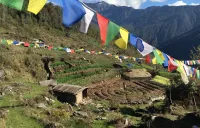
Rural development in Nepal
The Nepalko Sathi association leads its actions in favor of the Sherpas of Khembalung in the Arun valley (Province of Koshi). Nepalko Sathi
From Tumlingtar airport we reach by jeep the small town of Kahandbari where we are greeted by Kibutie and his family. From there, we climb to the small village of Gontala, in the heart of the actions of Nepalko Sathi (three days of walking), then we go up to Saissima, where Tendi Sherpa is rehabilitating the hamlet of his childhood. From Saissima it is possible to continue and make a loop towards Makalu and the impressive surrounding peaks (under tent).